Your cart is currently empty!

The master of classical art
3rd to 25th March
2026
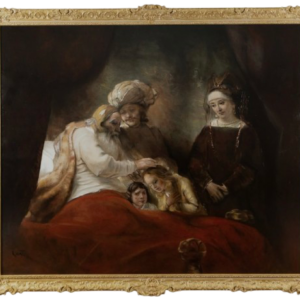
In the seventeenth century, the Dutch Republic experienced extraordinary artistic vitality. Genres multiplied—scenes of everyday life, landscapes, seascapes, and still lifes flourished. In cities such as Utrecht, Haarlem, and Amsterdam, different traditions intersected: a Mannerist legacy, the influence of Caravaggism, the circulation of prints, and the impact of journeys to Rome. Painters such as Ter Brugghen, Honthorst, and Baburen modernised history painting by combining naturalism, chiaroscuro, dramatic staging, and humanist references. Supported by a wide range of audiences—civic elites, Catholic circles, merchants, and princely courts—history painting, often seen as a secondary genre in the Dutch Republic, not only persisted but developed in new directions.
Within this vibrant landscape, where local traditions, international influences, and diverse publics converged, major figures emerged who profoundly reshaped pictorial genres. At the heart of this dynamism, Rembrandt and Vermeer embody two distinct paths toward modernity. Rembrandt reinvented history painting through an exploration of emotion, narrative, and individuality, working in a studio practice that was both deeply personal and firmly rooted in its time. Vermeer, in turn, transformed the genre scene into a silent, meditative space, where light and objects carry subtle meanings and open onto a global horizon.
With the same spirit of precision, illusion, and contemplation, Dutch still life occupied a central place in the seventeenth century. The pursuit of perfect illusion, virtuoso rendering of materials, moral symbolism, and the celebration of abundance all converge in these works. Whether in vanitas compositions or lavish displays, still lifes reflect both the prosperity of the Dutch Republic and the cultural depth of an art that questions the fragility of life even as it exalts the beauty of the visible world. For this reason, seventeenth-century Dutch art cannot be reduced to genre scenes or mere naturalism. Far from being simple images of daily life, these works also document a society undergoing profound transformation—deeply connected to global exchanges and intent on redefining the painter’s role in a changing world.
In this context, the Dutch artist Nard Kwast stands in the lineage of the great classical masters of the seventeenth-century Dutch Republic. He draws on their technical foundations—glazing techniques, mastery of chiaroscuro, and meticulous rendering of materials—as well as on the workshop’s artisanal discipline and a profound relationship to light and visual truth. Like the artists of the Golden Age, he understands painting as both a rigorous craft and a means of exploring human presence, rather than producing quick images. This lineage resonates strongly today: in an era dominated by speed, digital technology, and automation, Kwast revives historical methods to show that they remain powerful, expressive, and relevant. His work demonstrates that the Dutch pictorial tradition is not a static inheritance but a living resource, capable of nourishing contemporary creation, sharpening the viewer’s gaze, and reconnecting the public with the sensory depth of classical techniques.
Invited as a “master painter” on The New Vermeer, Nard Kwast was entrusted with reconstructing a completely lost Vermeer painting, known only through an early description: “A gentleman washing his hands in a transparent room with figures.” While other participants proposed freer or more contemporary interpretations, Kwast adopted an almost archaeological approach. He analysed the historical context, the recurring motifs in Vermeer’s work, and the period meaning of key terms, and he collaborated with experts at the Rijksmuseum to come as close as possible to the material reality of the seventeenth century.
The dutch master of classical art
Nard
KWAST